This post may contain affiliate links through which we may earn a small commission to help keep this website free.
Are blackberries good for kidneys?
Yes, blackberries are rich in antioxidants, fiber, and vitamins that are beneficial to people with kidney disease.
Are blackberries high in oxalates?
No, blackberries are considered low oxalate fruits. If you are prone to developing kidney stones, avoiding oxalates is not necessarily the best approach to preventing future stones. I recommend signing up for my free kidney stone newsletter where I talk a lot about kidney stones, how to read your labwork, and what nutrition strategies to implement to prevent future stones.
Are blackberries high in potassium?
One half cup of blackberries contains 117mg of potassium making them a low potassium fruit.
Are blackberries high in phosphorus?
No. One half cup of blackberries contains about 16mg of phosphorus. The phosphorus found in blackberries is natural and poorly absorbed by the body, so it is considered a low phosphorus food.
What are the benefits of blackberries?
- Blackberries contain vitamins and antioxidants. Antioxidants consumed through fruits and vegetables are considered to have protective effects against many chronic diseases.
- Blackberries are also a good source of fiber. Fiber is important for gut health as well as helping the body maintain potassium levels.
- Research shows that a low intake of fruits and vegetables is associated with an increased risk of developing kidney failure in people with kidney disease (as well as those who don’t have kidney disease.
Healthy ways to eat blackberries
- Fresh on their own as a snack, or mix them with other fruits to make a fruit salad
- Use blackberries as a topping with yogurt, like we did with other berries in our kidney friendly blueberry banana yogurt parfait
- Blend them into your smoothie for some vibrant color and a fiber boost like we did with other berries in our Blueberry Banana Peanut Low Protein Smoothie
- Add them to oatmeal for a kidney friendly breakfast
- Buy them frozen and enjoy as a cool treat on a hot day
- Blend them with kidney-friendly yogurt and make popsicles
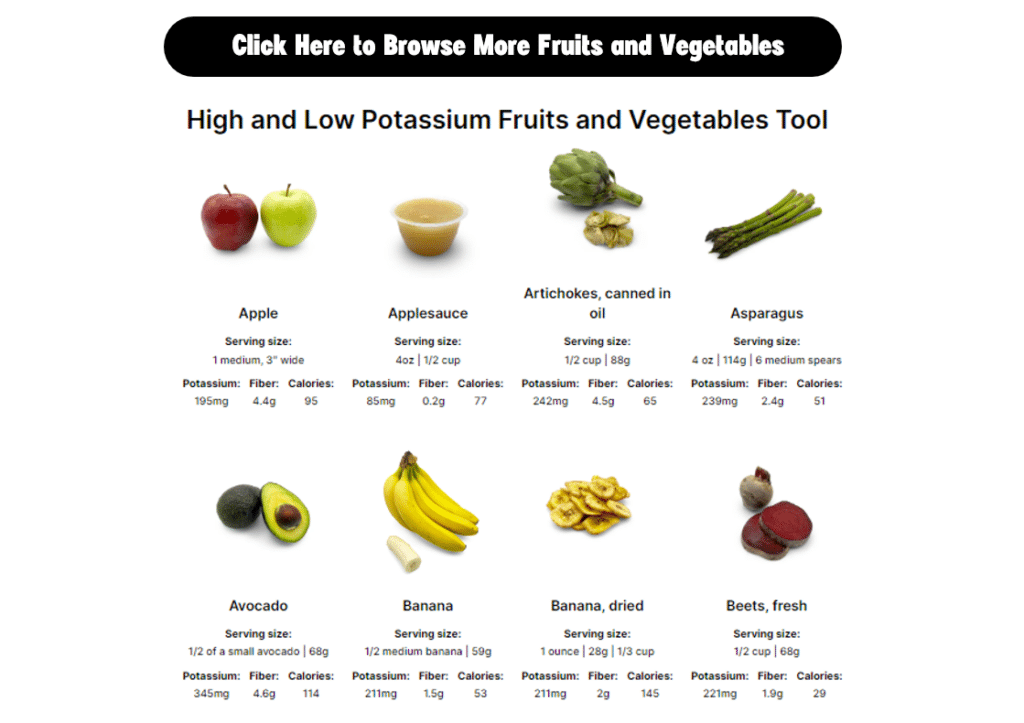
High and Low Potassium Fruit and Vegetable Tool
Looking for more information on other kidney friendly fruits and vegetables? Check out our Fruit and Vegetable Potassium Tool.