
If you have chronic kidney disease (CKD), you’ve probably heard that potassium levels are important to monitor — and you may be wondering whether your daily cup of coffee could be a hidden source. Here’s the good news: most people with CKD can still enjoy coffee in moderation. But it helps to understand how coffee (and what you put in it) can affect your potassium levels.
Table of contents
This post may contain affiliate links through which we may earn a small commission to help keep this website free.
How Much Potassium Is in Coffee?
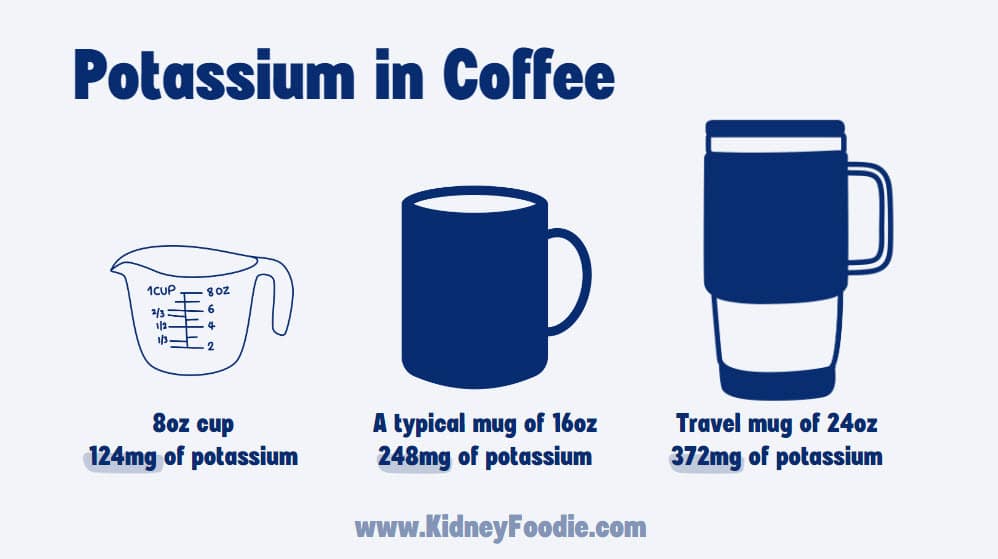
One 8-ounce cup of black coffee contains about 124 mg of potassium — whether it’s regular or decaf. That’s a relatively small amount, but it can add up depending on your mug size and how many cups you drink.
For example:
- A 16-oz mug = about 248 mg of potassium
- A large travel mug holding 3 cups or 24 oz = about 372 mg of potassium
Most people don’t stop at one small cup, so your actual potassium intake from coffee could be higher than you think.
Do coffee creamers add a lot of potassium?
The amount of potassium in creamers depends on the type of creamer that you use as well as how much of it you use. Here’s the potassium content of common add-ins:
- One tablespoon of heavy cream will have only 14mg of potassium
- One tablespoon of most plant based liquid creamers will have 0mg of potassium
- One tablespoon of 2% milk will have 24mg of potassium (although people who use milk in their coffee will typically use much more than just a tablespoon)
- One quarter cup of milk would add 98mg of potassium to your coffee
If you use more than the quantities listed above for creamer or milk, keep in mind that the amount of potassium coming from those additions will be higher. Milk tends to add the most potassium to coffee due to the higher potassium content and the tendency to use more of it to obtain the same taste.
For the lowest potassium (and phosphorus!) options, check out this guide to kidney friendly creamer for your coffee.
How does coffee affect potassium levels?
Because coffee contains potassium, it does have the potential to raise potassium leves, but the impact that it has depends on other factors that are unrelated to the total quantity of potassium in the beverage. One of the biggest factors in determining the impact of coffee has to do with insulin.
Coffee doesn’t contain carbohydrates or protein — which means drinking it alone doesn’t stimulate insulin release. Without insulin, your cells don’t absorb potassium from the bloodstream effectively, even if you haven’t had that much.
That means your blood potassium levels can temporarily rise, not because of the potassium in coffee, but because there’s nothing helping your cells pull potassium out of the blood.
Why Insulin Matters for Potassium
Most people associate insulin with blood sugar control. But it also plays a key role in moving potassium into cells, which helps stabilize potassium levels in your blood.
When you eat a balanced meal with carbohydrates or protein, your body releases insulin. That insulin helps:
- Move potassium from your blood into your cells
- Let your kidneys process and remove potassium over time
In people with healthy kidneys, this system works well up until about a GFR of 15. But if insulin isn’t released — like when drinking black coffee alone — potassium can remain elevated in the blood for a longer period.
How to Prevent High Potassium Levels and Still Enjoy Coffee
If you’ve had high potassium levels on labs, the timing of your coffee could be affecting your results — especially if you drink it on an empty stomach.
Try This Instead:
- Drink coffee with breakfast, especially one that includes carbs and protein
- Avoid drinking black coffee right before labs — it can lead to temporarily high potassium levels
- If you love coffee on an empty stomach, consider scheduling labs later in the day after you’ve eaten
These strategies can help you get a more accurate picture of your potassium levels — and avoid unnecessary alarm.
If you’re interested in learning more practical ways to manage potassium without avoiding healthy, high-potassium foods (and you’re not on dialysis), you can can check out our Potassium 101 course where we walk through all of the major (and often simple!) strategies for managing potassium the right way.
Other Coffee Considerations for People with CKD
Coffee and Anemia
Anemia is a common condition that people with CKD experience – a condition that often makes you feel very tired and fatigued. People with CKD can turn to coffee to overcome this exhaustion, but that can backfire because there are compounds in coffee that can actually make anemia worse. If you have anemia or low iron, consider limiting your coffee and tea intake to just 1-2 cups per day, and drinking them between meals rather than with iron-rich foods or supplements to minimize the impact on absorption.
Starbucks, Dunkin, and Other Speciality Coffee Drinks
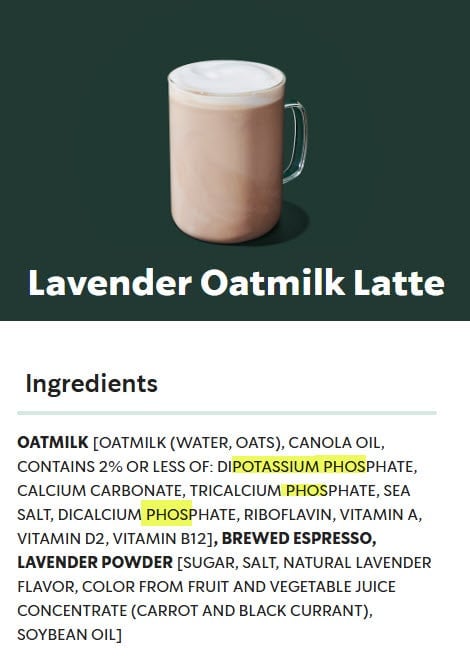
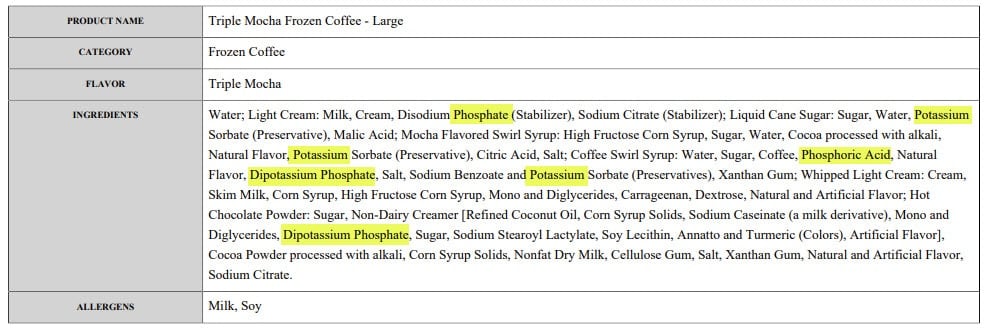
If you like to order fancier coffee at your favorite coffee shop, be sure to ask to see the ingredients and nutrition information. Many specialty drinks can contain potentially harmful additives like the examples below that contain added phosphates, added potassium, and added sugars. Fortunately, most larger chains will have their ingredient and nutrition information available online for you to reference.
Final Thoughts
For most people with CKD, a modest amount of coffee isn’t going to cause dangerously high potassium levels. But if you’re drinking large mugs multiple times a day — or if you tend to drink it on an empty stomach — it could contribute to elevated labs.
If you’re dealing with chronic high potassium, consider:
- Timing your labs and meals more strategically
- Looking at total potassium from all sources, not just coffee
- Exploring other causes of fatigue (drinking lots of coffee might be a sign your body is asking for something else)
Moderation is key — and that includes coffee.
If you’re interested in learning practical ways to manage potassium without avoiding healthy, high-potassium foods (and you’re not on dialysis), you can can check out our Potassium 101 course where we walk through all of the major (and often simple!) strategies for managing potassium the right way.