
Tea is one of the most popular beverages in the world, but if you have kidney disease, you may be wondering: does tea have phosphorus? Does tea have potassium? And are those amounts safe for your kidneys?
The good news is that most brewed teas are low in both phosphorus and potassium and can be enjoyed in moderation. However, some bottled and instant teas contain additives that can significantly raise phosphorus or potassium levels—so it’s important to know what to look for.
This post may contain affiliate links through which we may earn a small commission to help keep this website free.
Does Tea Have Phosphorus?
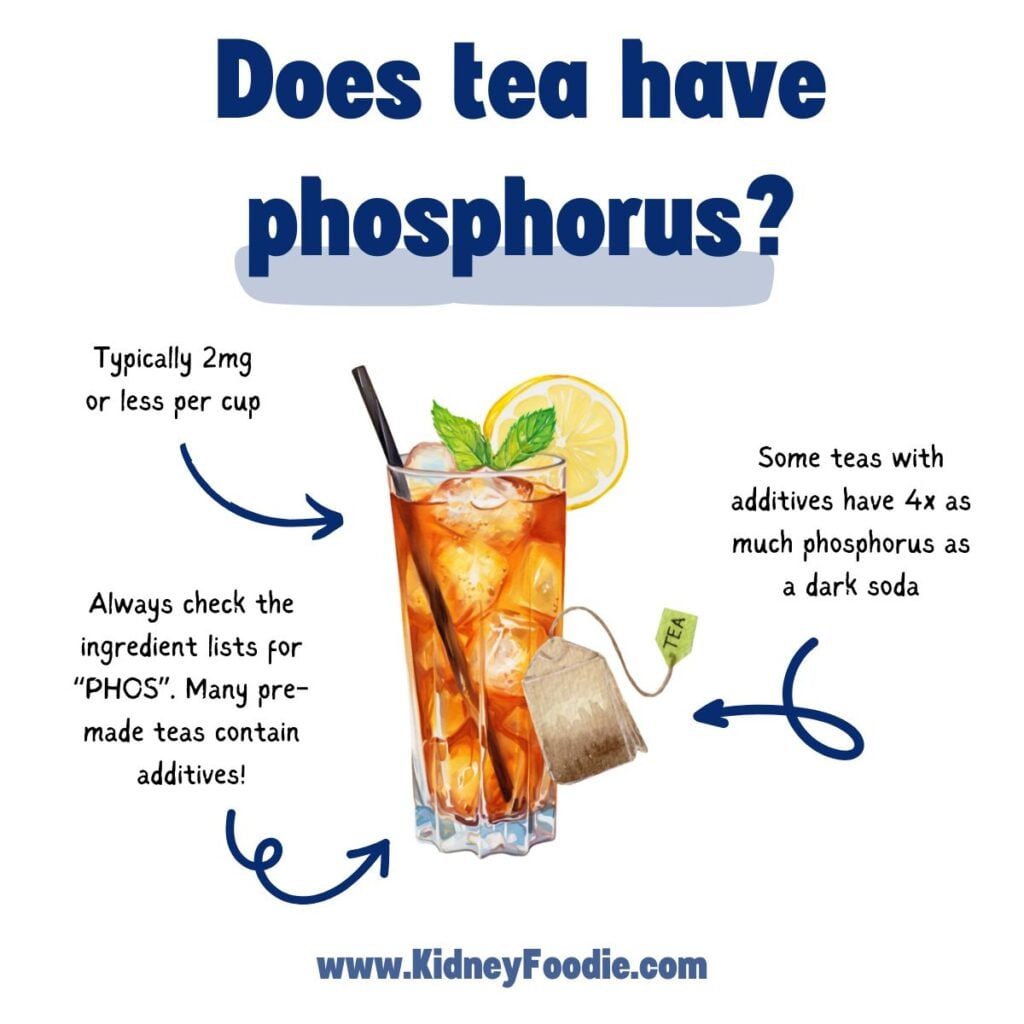
Most brewed teas contain very little phosphorus—typically 0–2 mg per cup. That includes black tea, green tea, chamomile, and most herbal teas brewed from bags or loose leaves.
However, some bottled and ready-to-drink teas contain phosphorus additives, like phosphoric acid or monopotassium phosphate. These additives are especially concerning for people with kidney disease because they’re absorbed much more efficiently by the body than naturally occurring phosphorus. Over time, excess phosphorus can increase the risk of mineral bone disease and cardiovascular complications.
To avoid this, check the ingredient list for anything that contains “phos”—and when in doubt, stick to home-brewed options.
Is tea high in phosphorus?
Brewed tea is not considered high in phosphorus. But certain bottled teas can contain 60–85 mg of phosphorus per cup due to additives.
For example, Green, ready-to-drink citrus diet tea contains 85 mg of phosphorus in just 8 ounces. That’s nearly four times the amount found in a cup of cola.
While brewed tea from bags or loose leaves generally contains only trace amounts of phosphorus, bottled and powdered instant teas are more likely to contain added phosphorus. Always read the label carefully.
The table below, based on data from the USDA shows the phosphorus and potassium content of various types of tea.
Pre-made Teas with No Phosphorus Additives
These brands had no phosphorus additives in any products listed in the USDA FoodData Central database (Oct 2022). Always check labels, but these are generally safer picks:
- 365 Everyday Value
- 4C
- 7 Select
- 8th Wonder
- Ahold
- Archer Farms
- Bai
- Bare Nature
- Bhakti
- Bigelow
- Blue Buddha
- Brooklyn Crafted
- Bruce Tea
- Cheribundi
- Circle K
- Corner Store
- Diet Snapple
- Doc’s Tea
- Fresh & Easy
- Fresh Foods Market
- Gaiam
- Gefen
- Goldenbrew
- Gratitude
- Harris Teeter
- Hawaiian Sun
- Honest
- Honest Tea
- Hubert’s
- Inko’s
- Ito En
- Joe Tea
- Joyba
- Kabaki
- Kings
- Kroger
- Long Island
- Lowes Foods
- Market District
- Marketside
- Meijer
- Milo’s
- Nature’s Promise
- Organics
- Ocean Spray
- Peace Tea
- Prairie Farms
- Publix
- Publix Deli
- Pure Leaf
- Raley’s
- Rama
- Red Diamond
- Ritchey’s
- Runningbyrd Tea Company
- Say When
- Shaka
- ShopRite
- Shurfine
- Sotea
- Sparkling Ice
- Sweet Leaf
- Tazo
- Teariot
- Teas’ Tea
- Teavana
- Tejava
- Texas Tea
- That’s Smart!
- The Republic of Tea
- Third Street
- Tiesta Tea
- Tops
- Vibe
- Wegmans
- Wild Harvest
- Zevia
- Zone 8
Pre-Made Teas That Almost Always Contain Phosphorus Additives
These brands typically contain phosphorus additives and should be avoided (as of the October 2022 USDA FoodData Central Database):
- Brisk
- Food Lion
- Fuze
- Gold Peak Tea
- H-E-B
- Lipton
- Nestea
- PICS
- Smart Sense
- Tampico
- Titan Tea
Pre-made Teas that May Contain Phosphorus Additives
Some brands have both kidney-friendly and non-kidney-friendly options. Check each label:
- Argo Tea
- Arizona
- Clover Valley
- Essential Everyday
- Food Club
- Gold Peak
- Great Value
- Hy-Vee
- Kum & Go
- Langers
- Luzianne
- Pacific Coast Selections
- Readyleaf
- Rutter’s
- Schnucks
- Signature Select
- Snapple
- SSIPS
- Steaz
- Sunny Select
- Swiss Premium
- Tradewinds
- Turkey Hill
- Weis
- Wellsley Farms
Does Tea Have Potassium?
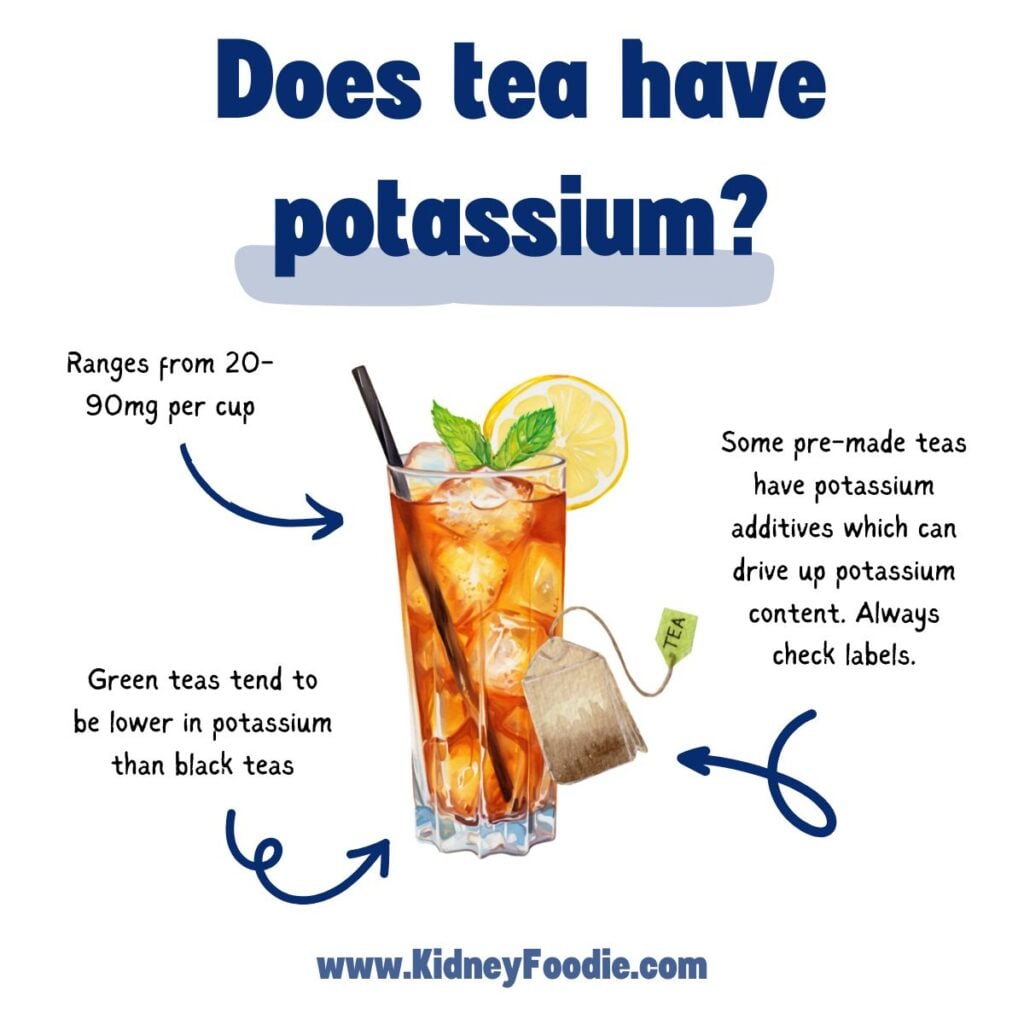
Tea naturally contains potassium, though usually in small amounts. Here are typical ranges:
- Black tea (1 cup): 30–88 mg
- Green tea (1 cup): 8–45 mg
- Herbal teas (1 cup): 20–50 mg
These amounts are relatively low, especially compared to high-potassium foods like bananas or potatoes. For most people with CKD—especially those not on dialysis—moderate tea consumption isn’t a concern.
Is tea high in potassium?
Not usually. Tea is considered a low- to moderate-potassium beverage. That said, if you drink tea in large quantities (more than 3–4 cups per day), the potassium can start to add up.
Also, some bottled or diet teas contain potassium additives (like acesulfame potassium), which can increase the total potassium content. Be sure to check the ingredients if you’re drinking anything pre-made.

Many people with CKD still have enough kidney function to handle a typical day’s worth of potassium, and a strict potassium restriction isn’t always necessary. In fact, there are several reasons potassium levels can get out of balance in kidney disease that have nothing to do with how much potassium you’re eating. That’s why it’s important not to cut out high-potassium foods unless you’ve been specifically told to do so by your doctor or dietitian.
If you’re interested in learning practical ways to manage potassium without avoiding healthy, high-potassium foods (and you’re not on dialysis), you can can check out our Potassium 101 course where we walk through all of the major (and often simple!) strategies for managing potassium the right ways.
Why isn’t potassium listed on the food label for teas?
FDA regulations do not require manufacturers to list potassium unless it contributes more than 2% of the daily value (94 mg out of 4,700 mg). So a single serving of tea may legally be listed as containing zero potassium, even if it contains up to 90 mg.
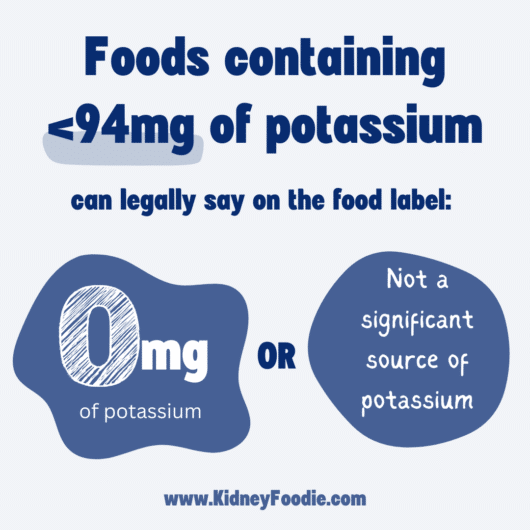
For people with CKD, this can be misleading. For example, drinking three 14-ounce glasses of tea (42 oz total) could add up to over 450 mg of potassium.
Is Tea Good for Kidney Disease?
In most cases, yes—tea can be safely enjoyed in moderation by people with kidney disease.
Brewed tea contains almost no protein, calories, phosphorus, or sodium. It does contain potassium and caffeine (typically). One cup of brewed tea has about 90 mg of potassium. Many people with chronic kidney disease (CKD) do not need to restrict their potassium intake and wouldn’t need to limit tea for that reason.
Potential Benefits of Tea
- Tea and kidney health: Drinking tea has been associated with a reduced risk of CKD and albuminuria and an increase in eGFR.
- Caffeine and eGFR: Caffeine, a natural component in many teas, has a diuretic effect that may temporarily increase eGFR, but it can also raise blood pressure—so moderation is key.
Potential Risks of Tea
- Tannins and iron deficiency: Excessive tea consumption can interfere with iron absorption due to tannins, natural compounds in tea that bind to iron. Drinking tea with every meal may increase your risk of iron deficiency anemia. I’ve had more than a few patients in a vicious cycle of being tied from anemia, drinking tea for the caffeine jolt, and worsening their anemia. Aim for no more than 1–2 cups per day, and avoid drinking tea with your most iron-rich meal.
- Oxalates and kidney stones: Tea also contains oxalates, compounds that can contribute to kidney stone formation. Black tea is higher in oxalates than green tea. If you are prone to oxalate kidney stones, you may want to limit tea intake.
- Caffeine and blood pressure: Tea can also raise blood pressure, especially in individuals sensitive to caffeine.
Can Tea Cause Kidney Disease?
There has been at least one case of kidney disease linked to tea—but the individual was consuming sixteen 8-ounce glasses per day. That is an extreme amount. Drinking 1–2 cups per day is generally considered safe and may even offer protective benefits.
What Kind of Tea Is Best for Kidney Disease?
Home-brewed tea is the best choice. Many pre-made or bottled teas contain phosphorus or potassium additives, which are best avoided by people with kidney disease. Be cautious with specialty blends like brewable chai lattes or other milk-containing teas, which are more likely to contain phosphorus additives.
Is Lipton Tea Good for Your Kidneys?
It depends on the type.
Pre-brewed Lipton teas—the kind you buy in bottles—often contain phosphorus additives, which should be avoided if you have kidney disease. These additives are a highly absorbable form of phosphorus, meaning they can significantly increase your phosphorus levels and contribute to complications like bone disease and vascular calcification. If you see ingredients like phosphoric acid or anything with “phos” on the label, that’s a sign to skip it.
Lipton tea bags, on the other hand, do not contain added phosphorus or potassium and are generally considered safe for people with kidney disease when consumed in moderation. Just keep in mind that all tea contains compounds like tannins and oxalates, which—when consumed in excess—can interfere with iron absorption and increase the risk of iron deficiency anemia or osteoporosis over time.
As a general guideline, it’s best to stick to no more than 1–2 cups per day and avoid drinking tea with your most iron-rich meal.