
If you have chronic kidney disease (CKD), navigating your food choices can be confusing—especially when it comes to dairy. One question I hear often is: Is mozzarella cheese okay for kidney disease? The good news is that mozzarella can absolutely be part of a kidney-friendly diet—with just a few things to keep in mind. Let’s break it down by nutrient.
Table of contents
This post may contain affiliate links through which we may earn a small commission to help keep this website free.
Is Mozzarella Cheese High in Potassium?
No, mozzarella cheese is a low-potassium food. According to the USDA, one ounce contains just 21.5 mg of potassium.
Most cheeses—including mozzarella—are low in potassium, with the exception of gjetost. Although milk (the base ingredient in cheese) contains a fair amount of potassium, cheesemaking changes that. During the process, curdled milk solids form the cheese, while the liquid (whey) separates and drains away. Potassium loves to follow water, so most of it leaves with the whey, resulting in a much lower potassium content in the final cheese.
If you have CKD, you may not need to avoid potassium-rich foods altogether. In fact, most people—especially in the early stages—can still handle normal potassium levels from whole foods. Even if your labs show high potassium, your diet may not be the root cause. If you’re interested in learning practical ways to manage potassium without avoiding healthy, high-potassium foods (and you’re not on dialysis), you can can check out our Potassium 101 course where we walk through all of the major (and often simple!) strategies for managing potassium the right way.
Is Mozzarella Cheese High in Phosphorus?
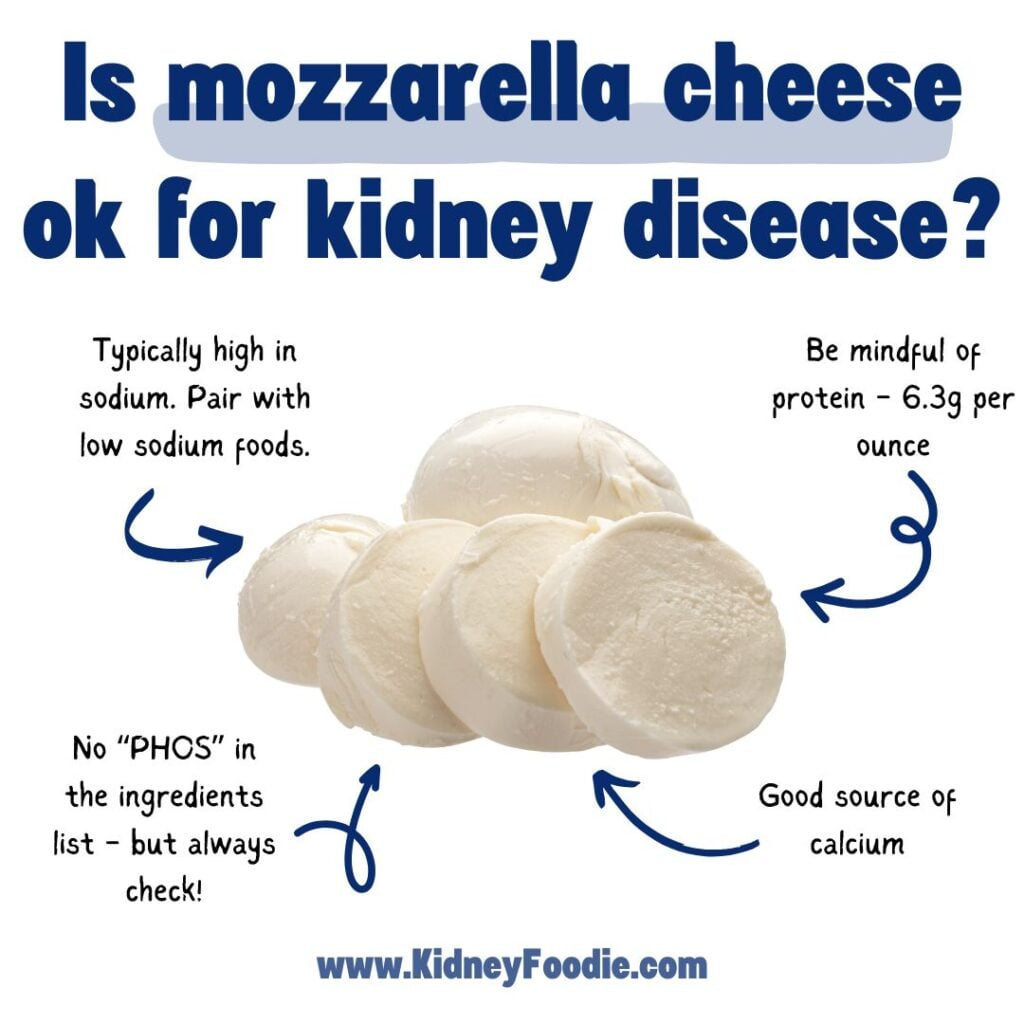
Mozzarella cheese contains about 100 mg of phosphorus per one-ounce serving, according to the USDA. Most of this phosphorus comes from natural sources, which your body doesn’t absorb very efficiently.
Phosphorus additives are a bigger concern. These artificial ingredients—commonly found in processed foods—are absorbed almost entirely and can quickly raise phosphorus levels in the blood. Fortunately, mozzarella cheese rarely contains phosphorus additives.
Compare this to American cheese, which also has around 100 mg of phosphorus per slice—but in a highly absorbable additive form. Your body might absorb nearly all the phosphorus in American cheese, but only about 60% of the phosphorus from mozzarella.
Watch out for plant-based mozzarella alternatives. Many contain phosphorus additives, so always read the ingredient list before you buy.
Sodium and Mozzarella Cheese
Mozzarella, like most cheeses, tends to be high in sodium. However, the sodium content varies widely depending on the brand and form. For example, Tillamook shredded mozzarella contains 190 mg of sodium per 90-calorie serving.
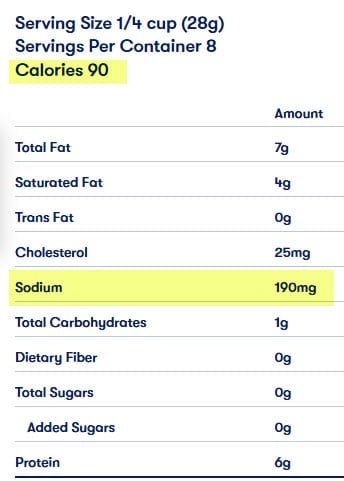
If you have CKD, aim for less than 2,300 mg of sodium per day. A simple rule of thumb: choose foods with fewer milligrams of sodium than calories per serving. Anything with more sodium than calories counts as a high-sodium food.
Most mozzarella products fall into the high-sodium category, but you can still enjoy them in moderation. Whenever possible, compare labels and opt for a lower-sodium version. Fresh mozzarella typically contains less sodium than pre-shredded or processed options, and some stores carry low-sodium cheeses.
Even if you can’t find a reduced-sodium option, you don’t need to give up cheese. Just pair it with low-sodium foods, or adjust other meals that day to keep your sodium intake in check.
Mozzarella Cheese and Protein
One ounce of mozzarella contains about 6.3 grams of protein—similar to an ounce of chicken. If you have CKD, you may need to monitor your protein intake, especially in later stages of the disease.
Studies show that eating more plant-based protein benefits kidney health. Since cheese is an animal-based protein, consider it part of your total protein intake and try to balance it with more plant-forward meals.
For example, topping a meatless stuffed pepper or vegetarian pasta with mozzarella is a kidney-friendlier option than layering it over beef lasagna.
Also, cheese tends to be less acidic than meat and may contribute less to creatinine production. So while it’s still an animal protein, mozzarella can be a gentler choice compared to beef or poultry.
Calcium and Your Kidneys
Mozzarella provides about 143 mg of calcium per ounce. That makes it a helpful source of this important mineral, especially if you’ve cut back on dairy as part of a plant-based diet.
KDOQI guidelines recommend that adults with CKD aim for 800–1,000 mg of calcium daily, including what you get from food, supplements, and medications. But here’s something important to know: your blood calcium level doesn’t necessarily reflect your dietary intake. The body works hard to keep your calcium level stable—even if you’re not eating enough.
If you fall short on calcium over time, you increase your risk for osteoporosis, which makes your bones more fragile and prone to fractures—even from minor falls.
So, if you enjoy cheese, there’s no need to avoid it just because you have CKD. In fact, including moderate amounts of calcium-rich foods like mozzarella can help you meet your daily needs.
This post focuses on people with CKD who are not on dialysis. If you’re receiving dialysis, your nutrition needs may be different—check with your care team for personalized guidance.
Final Thoughts: Can You Eat Mozzarella Cheese with CKD?
Yes—mozzarella cheese can absolutely fit into a kidney-friendly diet. It’s low in potassium, contains mostly natural (less absorbable) phosphorus, and offers a good source of calcium. While it does contain sodium and protein, you can manage those by choosing your portion sizes carefully and pairing mozzarella with plant-based or lower-sodium meals.
Remember, your kidney diet isn’t about perfection or restriction—it’s about creating a balanced, sustainable way of eating that supports your health.
Want more simple, practical nutrition tips for CKD? Join the Kidney Foodie newsletter to get expert-backed advice, helpful resources, and real-world meal ideas delivered straight to your inbox.