
Insomnia is a common problem in people with CKD with various studies indicating that anywhere from 14-95% of CKD patients may experience insomnia. If you choose to take a medication to assist in sleeping, you may be inadvertently raising your phosphorus levels.
This post may contain affiliate links through which we may earn a small commission to help keep this website free.
Phosphorus Additives in Sleep Aids
Phosphorus in the form of additives is very easily absorbed by the body and can lead to high phosphorus levels, especially in people with CKD. Phosphorus additives are common in many processed foods, but many people do not realize that they can also be found in medications and supplements.
There are three common over the counter sleep medications or supplements. You should always talk to your doctor before taking a medication, but below I’ll discuss the phosphorus content of some of these medications.
Diphenhydramine HCL
Diphenhydramine is the common ingredient in many types of sleep aids. This medication is probably most well known for being the active ingredient in Benadryl, which we all know can make you drowsy. It is now also marketed separately by brands such as Zzzquil as a sleep aid.
Diphenhydramine is typically available in several forms: tablets, gelcaps or liquicaps, and liquid.
Generally speaking, the tablets will almost always contain a phosphorus additive while the gelcap, liquidcap, and liquid versions typically do not contain a phosphorus additive. Tablets are generally the cheapest form, so this is a bit unfortunate.

One problem with phosphorus additives in medications is that the labels will not tell you how much phosphorus is in the medication. They have to tell you how much of the active ingredient is in each dose, but they are not required to tell you how much of the inactive ingredients (which is where you will see the phosphorus additive listed).
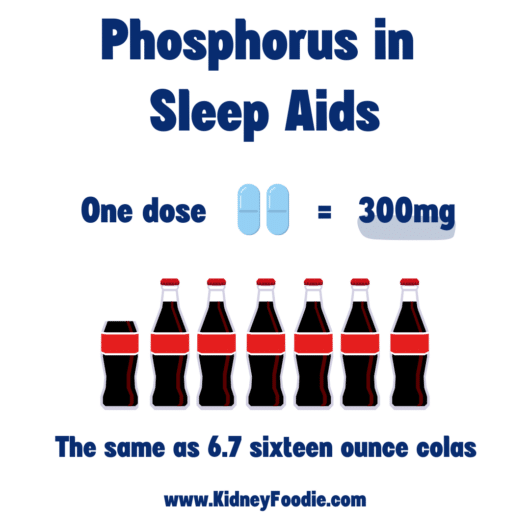
Fortunately, for diphenhydramine, we do have some data available. Former colleagues of mine published the phosphorus content of common medications taken by dialysis patients and diphenhydramine made the list. They found that each tablet typically contained 150mg of phosphorus and that the typical dose was two tablets. This means that each dose was adding a whopping 300mg of phosphorus additive to their day.
The recommended daily allowance for phosphorus is just 700mg, so a dose of this sleep aid is equal to about 43% of your recommended daily intake of phosphorus. And because the phosphorus is in the form of an additive, it is almost fully absorbed by the body. To put this in perspective, I’m sure you’ve been told to avoid dark cola because of the phosphorus. Cola drinks, especially dark colored colas contain a lot of phosphorus additives. But a single dose of this sleeping aid has the same amount of phosphorus as nearly seven 16oz colas – that is a lot!
If your doctor has given you the okay to use diphenhydramine, I recommend sticking to the liquid, liquicap, or gelcap versions. And always check the ingredient lists just to be sure there are no phosphorus additives. If you come across a tablet version with no phosphorus additives, let me know! You can either sign up for my newsletter and simply reply to any email or send me a message through the contact us form.
Doxylamine Succinate
Doxylamine is the other common active ingredient in over the counter sleep aids. I have only seen this medication in tablet form, and I have only seen preparations that contain phosphorus additives (if you find one that doesn’t have additives, let me know!). Additionally, I am not aware of any studies that have analyzed the phosphorus content of this specific medication.

However, given the similar ingredient lists between doxylamine tablets and diphenhydramine tablets, I would personally assume that the phosphorus content is similar and recommend avoiding this medication, especially if you have known phosphorus issues. I recommend talking to your doctor about what other options are available. Many prescription medications will not contain phosphorus additives.
Melatonin
Melatonin is a dietary supplement that is marketed to help promote sleep. The majority of melatonin ingredient lists that I have reviewed do not contain any phosphorus additives. Check with your doctor about whether or not melatonin would be appropriate for you.
Options to reduce the phosphorus in medications
If for some reason, you are not able to find an alternative medication that does not contain phosphorus additives, I recommend that you talk with your doctor about whether or not you should consider taking a phosphorus binder with any phosphorus containing medications.
Phosphorus binders are a type of medication that basically act as a magnet for phosphorus. When taken at the same time as something that contains phosphorus, the binder can grab onto the phosphorus and prevent it from being absorbed into the body.
Additional strategies for improving sleep
- Address sleep apnea – Obstructive sleep apnea is not uncommon in people with CKD. Studies estimate anywhere between 27-71% of people with CKD have obstructive sleep apnea. Although many people are aware that overweight individuals who snore may have sleep apnea, it does not always present this way. If you are having difficulty sleeping, consider asking your doctor to refer you to a healthcare provider that specializes in sleep disorders.
- Address restless leg syndrome – Restless Leg Syndrome is another common sleep disorder in people with CKD. It is generally described as a feeling or desire to move your legs, especially when you are resting. The sensation can be uncomfortable and end up disturbing your sleep. A common cause of restless leg syndrome is iron deficiency (which is also not uncommon in people with CKD). If you suffer from restless leg syndrome, ask your doctor to order an iron panel with your labs to determine if you need to supplement with iron. Note: you should only supplement with iron under the supervision of a healthcare provider to avoid iron overload.
- Lifestyle changes – there are a number of habits that can make it harder to fall asleep or get good rest. Many of these are things that we can control.
- Reduce or eliminate caffeine – Caffeine can prevent you from getting a good night’s rest. Depending on your current habits, you can start with simply reducing the amount of caffeine or avoiding caffeine after a certain point in the day. People respond differently to caffeine. Some individuals can drink caffeine right before bed and still get rest, while others have to cut themselves off before noon or they will be wired all night. Also, the body’s ability to clear caffeine changes as you get older, so what you could tolerate when you were 30 is probably not the same as what your body can tolerate at 60.
- Reduce or eliminate alcohol – although many people think that a drink before bed can help them fall asleep, alcohol is know to disturb sleep and can result in less restful sleep or middle of the night wake-ups
- Exercise – getting regular exercise can help improve sleep, which is just one of the MANY benefits to getting adequate exercise.
- Avoid screens before bed – The CDC recommends turning off your devices at least 30 minutes before bedtime.
Want to receive weekly emails with CKD Nutrition information like this? Sign up for our newsletter!