
Wondering about the phosphorus in bacon—or whether bacon is high in potassium? If you have kidney disease, you’ve probably heard that bacon is off-limits. And while it’s true that bacon can be high in sodium and often contains added phosphorus (and sometimes even added potassium), that doesn’t mean you have to give it up entirely. In this article, we’ll break down the real story on phosphorus and potassium in bacon, how to find better options, and how to enjoy it occasionally without derailing your kidney-friendly diet.
Table of contents
This post may contain affiliate links through which we may earn a small commission to help keep this website free.
Is Bacon High in Phosphorus?
Bacon often contains phosphorus additives, which makes it a high-phosphorus food—especially for people with kidney disease who need to manage their phosphorus levels. Phosphorus additives are particularly concerning because the body absorbs them extremely efficiently—nearly 100%—compared to the 30–60% absorption rate for phosphorus naturally found in plant and animal foods.
Too much phosphorus can damage the cardiovascular system and lead to calcium deposits in the arteries. Since people with kidney disease can’t remove excess phosphorus as well as those with healthy kidneys, phosphorus additives are more likely to raise phosphorus levels quickly and significantly.
How Much Added Phosphorus is in Bacon?
This used to be a tricky question, since phosphorus isn’t usually listed on nutrition labels. But thanks to updated USDA data, we now have a better idea of how much phosphorus is in bacon.
The USDA recently analyzed various samples of restaurant bacon and included phosphorus in their calculations.
The USDA analyzed various restaurant bacon samples and included phosphorus content in their data. The lowest-phosphorus sample had 283mg of phosphorus per 100g. I adjusted for the protein content and compared it to fresh pork belly (the typical base for bacon). Pork belly has about 7.5 mg of phosphorus per gram of protein, and bacon has roughly 2.58g of protein per slice. That works out to about 19 mg of phosphorus per slice if no additives are used.
When you adjust the lowest phosphorus restaurant bacon down to a slice (about 6.3 g), the amount comes to approximately 18 mg of phosphorus per slice—what you’d expect from naturally occurring phosphorus.
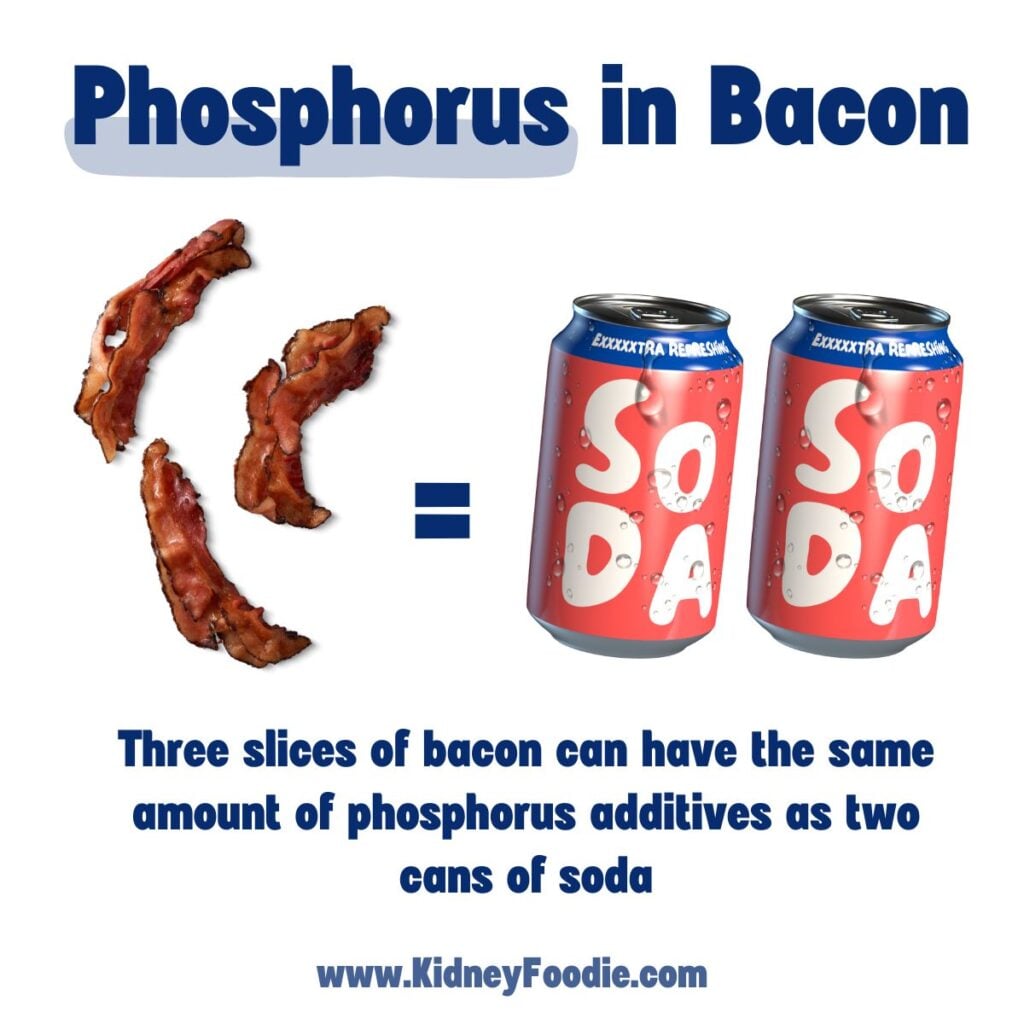
In contrast, the highest phosphorus bacon sample had 611mg per 100g, or about 38mg of phosphorus per slice—more than double the amount of phosphorus as the lowest phosphorus sample!
To put that in perspective: eating three slices of the high-phosphorus bacon adds the same amount of phosphorus as drinking over two 12-ounce cans of dark cola.
Low Phosphorus Bacon
When possible, choose bacon without phosphorus additives. In my USDA database search, 73% of bacon products listed phosphorus additives. I also assume most restaurant bacon contains them.
Uncured bacon is generally less likely to contain phosphorus additives. It also doesn’t contain nitrites or nitrates (a separate topic). During our bacon taste test, I included an uncured option to compare flavors. No one in my family could tell the difference. They looked and tasted identical.
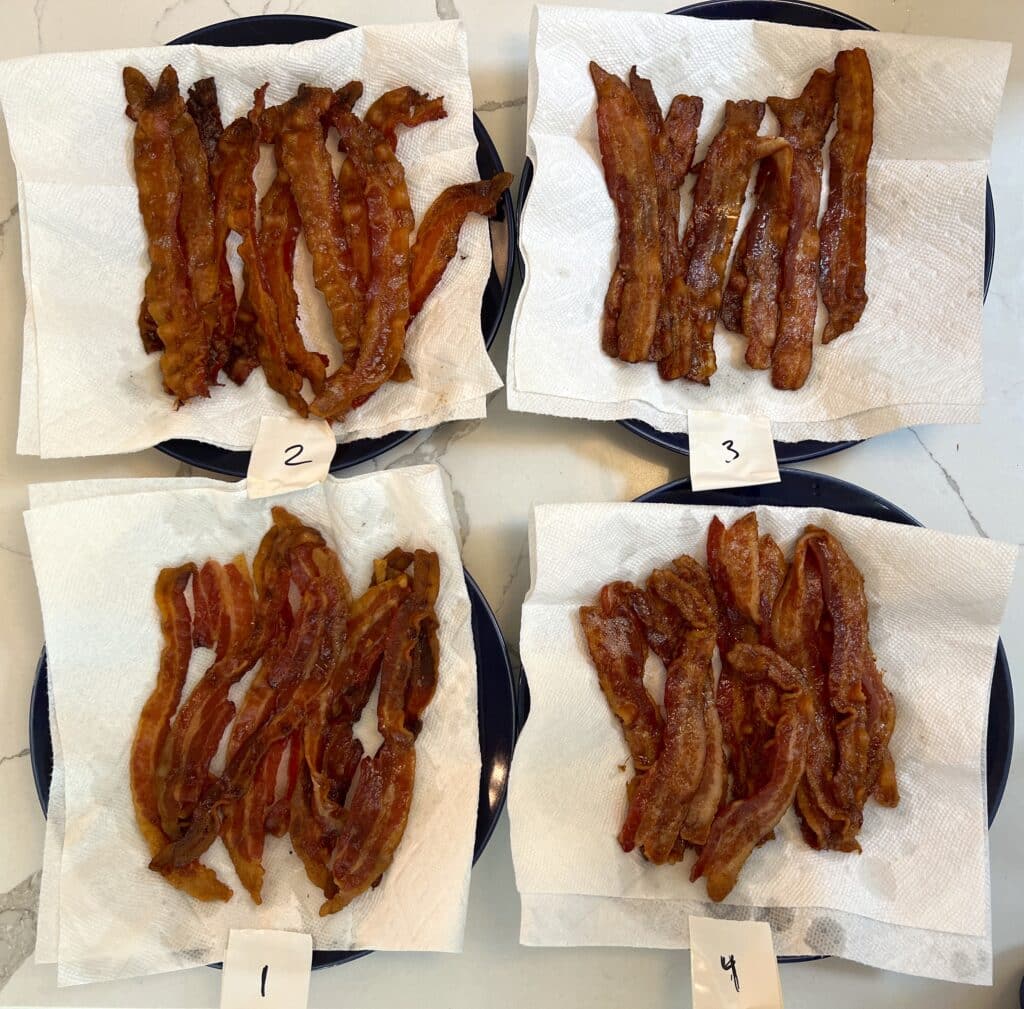
Bet you can’t tell which one is uncured!
Is Bacon High in Potassium?
Bacon isn’t usually considered a high-potassium food, but several brands use potassium-based additives. For example, Butterball Low Sodium Turkey Bacon contains a potassium additive and has 110 mg of potassium in a 30-calorie slice. For comparison, that’s the same amount of potassium in a 30-calorie portion of orange. With nearly four times more potassium than calories, I consider that a high-potassium food.
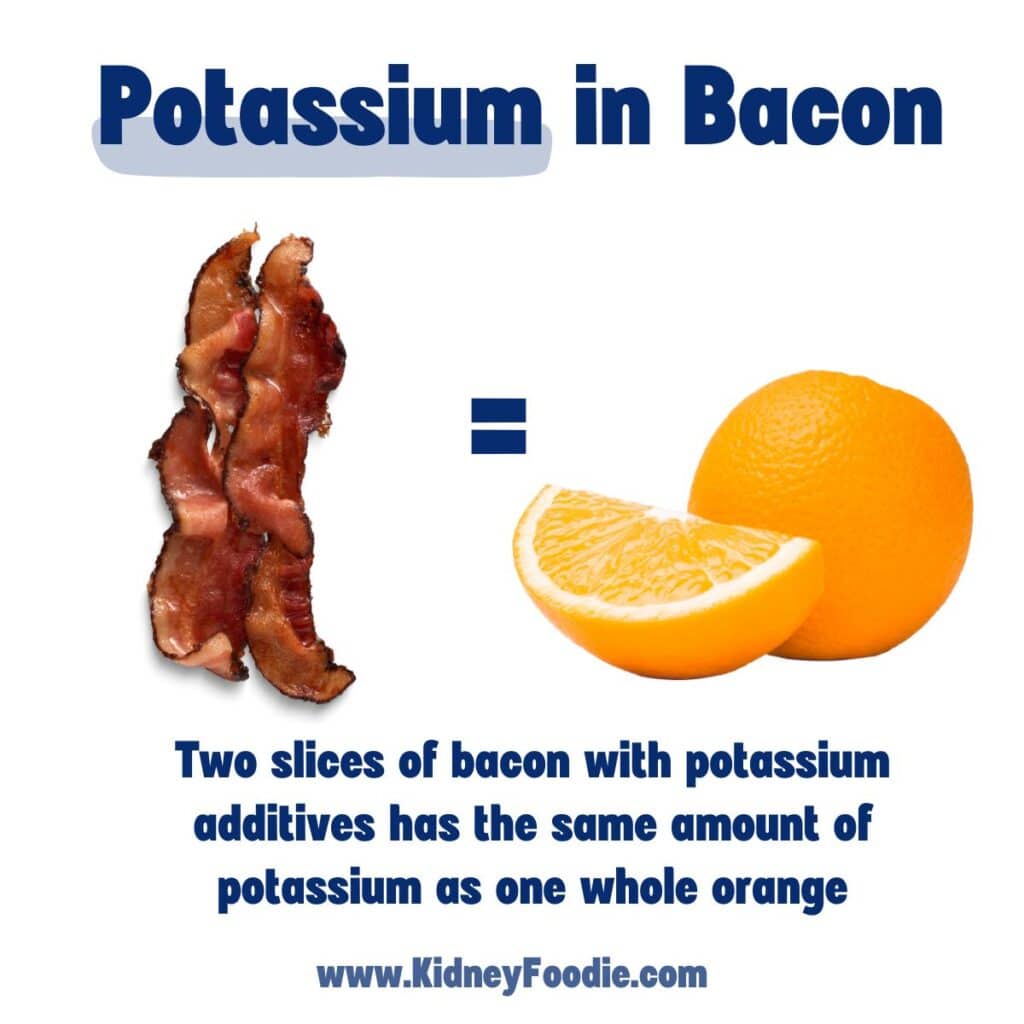
The USDA’s data showed that a slice of restaurant bacon contained between 23mg and 46mg of potassium, depending on the sample. Three slices (about 95 calories) could give you 69–138 mg of potassium. Unfortunately, there’s no way to tell from the label whether these bacon slices include potassium additives or just naturally occurring potassium.
As a comparison, a cup of blueberries contains about 114 mg of potassium and 84 calories—so yes, bacon can contain more potassium than some fruits.
That said, if you’re eating one slice of bacon that’s lower in sodium and free of phosphorus additives, potassium isn’t likely to be a concern. When I analyzed the USDA food database, 99% of bacon products that had potassium additives also had phosphorus additives. So if you avoid bacon with phosphorus additives, you’ll probably avoid potassium additives as well.
Of course, many factors influence potassium levels in the body—and not all of them relate to how much potassium you eat. If you’re interested in learning practical ways to manage potassium without avoiding healthy, high-potassium foods (and you’re not on dialysis), you can can check out our Potassium 101 course where we walk through all of the major (and often simple!) strategies for managing potassium the right ways.
Is Bacon High in Sodium?
Bacon is typically very high in sodium. In fact, it often contains five times more sodium than calories, which puts it firmly in the high-sodium category.
Generally, we consider a food “low sodium” if it has fewer milligrams of sodium than calories. Bacon almost never meets that standard (and let’s be honest—if it did, it probably wouldn’t taste like bacon anymore).
Since finding truly low-sodium bacon isn’t realistic, the goal is to choose a brand with the least amount of excess sodium. That means looking at the sodium and calorie counts side by side and choosing the option where the sodium number is as close to the calorie number as possible. The smaller the gap between them, the less excess sodium the bacon contains.
The best bacon options for kidney health are those that keep sodium in check and avoid phosphorus additives.
When we did a bacon taste test in our house, my kids actually liked the lower sodium version best. We’ve completely switched over to using lower sodium, no-added-phosphate bacon now.
And as always, portion size matters. I truly believe any food can fit into a kidney-friendly diet—as long as you keep the portions reasonable.
How much protein is in bacon?
The protein content in bacon varies based on the fat content and thickness of the slices. According to the USDA, one 28 g slice contains about 4 g of protein. But the bacon I buy at home has thinner slices, and each slice has only 2 g of protein.
If you have CKD and aren’t on dialysis, bacon is considered a high-protein food. Many people in earlier stages of CKD are advised to limit protein, so it’s best to use bacon in small amounts to flavor meals rather than serve as a main protein source.
Kidney Friendly Bacon You Can Buy
Here are some tips for choosing more kidney friendly bacon:
- Check the ingredient list for phosphorus additives. Most bacon contains them, so you’ll need to look closely—or use our guide to help. This step also helps eliminate bacon with potassium additives, since those tend to appear together.
- Compare sodium levels. If you find more than one phosphate-free bacon, choose the one with the lowest sodium content.
All the bacon options I recommend contain no phosphorus additives and have less than 170 mg of excess sodium per serving. To balance your meal, pair them with lower-sodium foods like lightly salted nuts and fruit.
Hormel Black Label Lower Sodium Bacon
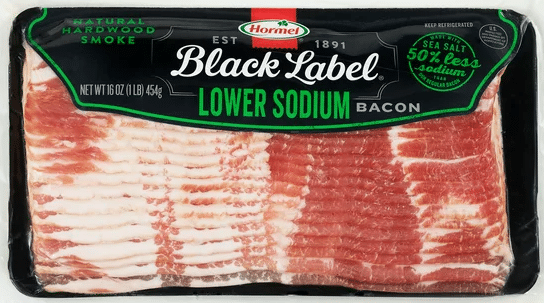
- Calories: 80
- Protein: 6g
- Carbohydrate: 0g
- Fat: 7g
- Sodium: 200mg
- Phosphorus
Additives: None - Calcium: 0mg
- Fiber: 0g
- Sugar: 0g
Check Prices

Publix Greenwise Uncured Bacon
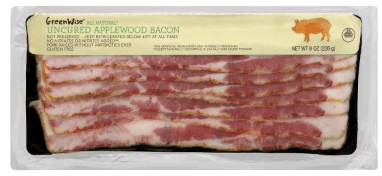
- Calories: 70
- Protein: 2g
- Carbohydrate: 0g
- Fat: 6g
- Sodium: 210mg
- Phosphorus
Additives: None - Potassium: 40mg
- Calcium: 1mg
- Fiber: 0g
- Sugar: 0g
Kiolbassa Dry Cured Hickory Bacon

- Calories: 230
- Protein: 9g
- Carbohydrate: 0g
- Fat: 21g
- Sodium: 340mg
- Phosphorus
Additives: None - Calcium: 0mg
- Fiber: 0g
- Sugar: 0g
Niman Ranch Applewood Smoked Uncured Bacon
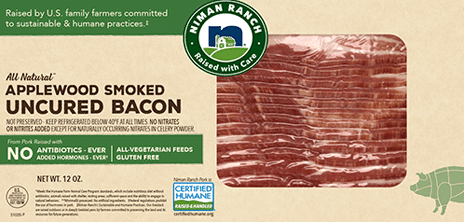
- Calories: 70
- Protein: 2g
- Carbohydrate: 0g
- Fat: 7g
- Sodium: 135mg
- Phosphorus
Additives: None - Calcium: 0mg
- Fiber: 0g
- Sugar: 0g
Check Prices

Smithfield Uncured All Natural Bacon
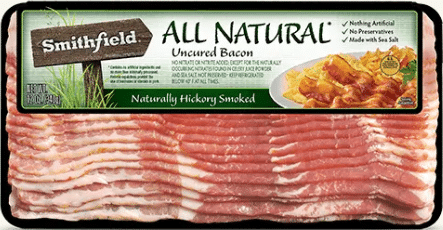
- Calories: 80
- Protein: 5g
- Carbohydrate: 0g
- Fat: 6g
- Sodium: 250mg
- Phosphorus
Additives: None - Calcium: 0mg
- Fiber: 0g
- Sugar: 0g
What should I do if I can’t find one of these products?
- Ask your grocery store to stock this product. Many grocery stores are willing to stock a particular item. You’ll never know until you ask!
- Email food companies! This is not a quick solution, but if we all started to advocate more for what we want and need with food companies, I think they would eventually listen. A LARGE percentage of the US population has kidney disease, and I don’t think food companies even realize that some minor tweaks to recipes would make their products more appealing. I don’t think anyone reads a food label and says “Ew, they didn’t use monocalcium phosphate. I refuse to eat this!”, but we know there are a lot of people with kidney disease who see the “phos” and refuse to buy the item (rightfully so!). If this is something you are willing to do, just search for the product manufacturer’s website, go to their contact page, and send them a message. It can be as simple as “Hi – I have kidney disease and would love to buy your [INSERT PRODUCT NAME] product, but unfortunately it has phosphate additives. I really wish you would consider making this product without phosphorus additives so me and the 40 million other people with kidney disease could enjoy it. Thanks!“