When it comes to preventing calcium oxalate kidney stones, most people focus on cutting back on high-oxalate foods like spinach. But they are probably not aware that foods containing collagen could be a significant source of oxalate – even though collagen doesn’t actually contain any oxalate.
These “sneaky” sources of oxalate can show up in your urine and contribute to stone formation, and unfortunately, eating more calcium doesn’t help bind this type of oxalate before it reaches your kidneys. Let’s take a closer look.
Table of contents
This post may contain affiliate links through which we may earn a small commission to help keep this website free.
How Collagen Causes High Urine Oxalate
Your body can make oxalate from certain amino acids, specifically one called hydroxyproline, which is found in high concentrations in collagen and gelatin. When you consume foods rich in hydroxyproline, your body may convert a portion of that into oxalate, which is then excreted in your urine.
Here’s the problem: calcium in your diet can help bind oxalate that’s naturally present in food before it’s absorbed. But it can’t bind the oxalate your body makes internally. That means these sources of oxalate sneak by your usual prevention strategies.
Common Foods and Products That Contain Collagen and Gelatin
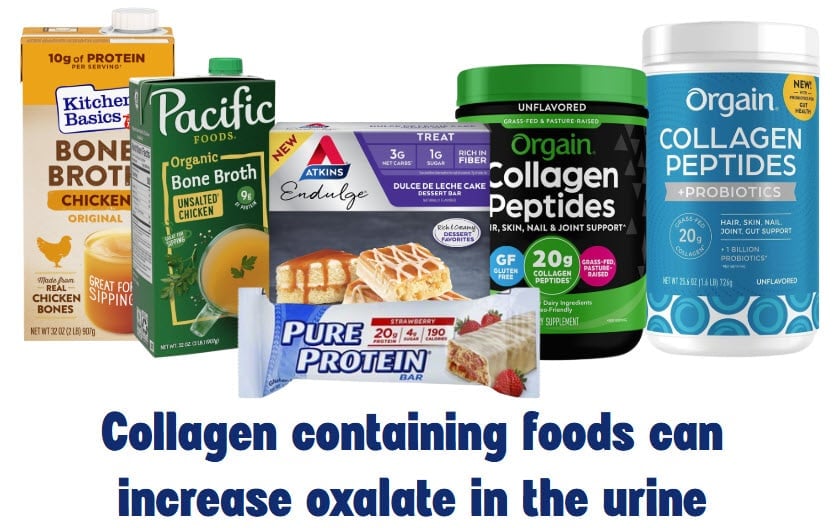
Here are some examples of sneaky sources of oxalate you might not realize could be an issue:
- Collagen powders and supplements – Often marketed for skin, hair, and joint health
- Bone broth – Popular in Paleo and low-carb diets and often used as a substitute for stock in recipes
- Gelatin-based desserts and supplements – Including gummies and Jell-O-style snacks
- Chicken skin – Naturally high in collagen
- Protein bars or shakes – Especially those that list collagen as a protein source
Even if these foods don’t contain oxalate directly, your body might turn some of the protein into oxalate.
How much oxalate does collagen make?
Collagen is about 23% hydroxyproline and proline, both of which can lead to oxalate formation since the body can convert proline into hydroxyproline. Only a portion of these amino acids would be converted to oxalate. Let’s look at a hypothetical example:
- A 10-gram serving of collagen powder contains about 2.3 grams of hydroxyproline and proline based on the 23% estimate.
- If your body converts 15% of that 2.3g into oxalate (a low-end estimate), you’re producing around 34.5 mg of oxalate
That’s more than the 25 mg/day threshold where urinary oxalate is known to raise the risk of kidney stones.
Some people may convert even more than 15%, depending on genetic differences in metabolism—some studies suggest up to 50% conversion is possible in certain individuals.
Should people with kidney stones avoid collagen and gelatin?
Yes, if your urinary oxalate level is elevated, and you’re currently forming calcium oxalate stones, you should consider avoiding collagen-heavy foods and supplements. Try cutting out these sources and retesting your 24-hour urine after a few months to see what impact they have on your oxalate levels.
If your urine oxalate levels improve and your stone risk decreases, you’ll know these foods were contributing to the problem.
And remember, a small amount of gelatin in a daily multivitamin or capsule is unlikely to have a significant effect. It’s large doses—like a full scoop of collagen powder or daily cups of bone broth—that are most concerning.
Final Thoughts
If you’re doing everything right—drinking more fluids, increasing your calcium, watching sodium—but your urine oxalate is still high, don’t forget to check your pantry and supplement cabinet for collagen, bone broth, and gelatin.
These hidden sources of oxalate might be sabotaging your progress.
For more support and strategies to lower your stone risk, sign up for my free newsletter. You’ll get helpful tips, recipes, and science-backed guidance to keep your kidneys healthy.