If you form calcium oxalate kidney stones, you may be wondering whether vitamin C is good or bad for you. This can be a confusing topic, especially since vitamin C is often associated with good health. But when it comes to kidney stone prevention, the type and amount of vitamin C you consume matters—a lot.
Let’s break down the relationship between vitamin C and oxalate and what you need to know to stay stone-free.
Table of contents
This post may contain affiliate links through which we may earn a small commission to help keep this website free.
How Vitamin C Affects Oxalate
Calcium oxalate stones form when calcium binds with oxalate in the urinary tract. Oxalate can come from two sources:
- From food (such as spinach, almonds, or potatoes)
- From your body converting other substances into oxalate
Vitamin C is one of those substances. Your body can convert excess vitamin C into oxalate, which then gets excreted through your urine. When oxalate levels get too high or concentrated, it can bind with calcium and contribute to stone formation.
So, the more vitamin C you take in—especially from supplements—the more oxalate your body may produce.
Whole Foods vs. Supplements: Not All Vitamin C Is the Same
Vitamin C from Food
Vitamin C that naturally occurs in fruits and vegetables is generally not a concern for kidney stone formation. In fact, these foods offer several benefits for stone prevention:
- High water content, which helps dilute your urine
- Naturally low in sodium, which helps reduce calcium loss in the urine
- Rich in citrate, a natural inhibitor of stone formation
Vitamin C from Supplements
This is where problems can arise. Supplements often contain mega-doses of vitamin C—sometimes 10 times more than your daily requirement.
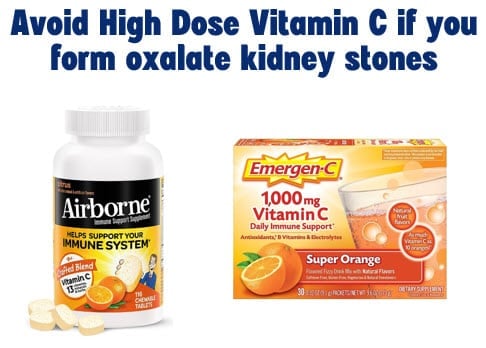
For example:
- Immune support supplements like Emergen-C or Airborne often contain 1,000 mg of vitamin C per dose
- Multivitamins may contain excessive vitamin C levels
- Fortified drinks (including some “lemonade” mixes, coconut water, or fruit drinks) may have added vitamin C, even if the product appears “natural”
When your body receives more vitamin C than it needs, it can convert the excess into oxalate. This increases the amount of oxalate in your urine and raises your risk of developing calcium oxalate stones.
How Much Vitamin C Do You Actually Need?
The Recommended Daily Allowance (RDA) for vitamin C is:
- 90 mg per day for men
- 75 mg per day for women
These needs are easily met with a balanced diet that includes a few servings of fruits and vegetables. For example, just half a cup of bell pepper exceeds your daily requirement!
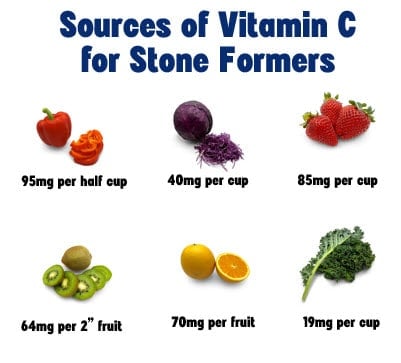
If you take a multivitamin, check the label. Look for one that contains no more than 100% of the Daily Value for vitamin C. There is no need to exceed that amount since you will get some vitamin C from the foods you eat each day.
What to Watch Out For
If you are prone to calcium oxalate stones and concerned about your vitamin C intake, here are some steps to take:
- Check your supplement labels. Stop taking any supplement (or combination of supplements) with more than 100% of the daily value unless directed by a healthcare provider.
- Avoid immune-boosting products with high vitamin C. These can deliver as much as 1,000 mg in a single dose.
- Read the nutrition facts labels for foods and drinks that you consume. Many contain added vitamin C.
Final Thoughts
Vitamin C is an essential nutrient, but more isn’t always better—especially if you form calcium oxalate kidney stones.
Stick to getting your vitamin C from whole foods, which offer other benefits like fiber, water, and natural citrate. Be cautious with supplements and fortified foods, and always check labels for hidden vitamin C.
If you’re dealing with high urine oxalate levels, cutting back on supplemental vitamin C might be a simple yet powerful step in reducing your stone risk.
Want more tips like this? Sign up for my free newsletter for ongoing advice, recipes, and support for kidney stone prevention.