
Almond milk has quickly become one of the most popular non-dairy alternatives on the market—but is almond milk good for kidneys?
If you have chronic kidney disease (CKD), you’ve probably heard that it’s important to watch your intake of protein, potassium, phosphorus, and sodium. The type of milk you choose can have an impact on these nutrients.
In this article, we’ll break down how almond milk fits into a kidney-friendly diet, whether it’s low in potassium and phosphorus, and who may want to be cautious with it.
Table of contents
- Is Almond Milk Low in Potassium?
- Almond Milk Is Low in Protein—Is That Good or Bad?
- What About Calcium in Almond Milk?
- What About Sodium in Almond Milk?
- Almond Milk vs Cow’s Milk: Nutrient Comparison
- Who Should Be Cautious with Almond Milk?
- So, Is Almond Milk Good for Kidney Disease?
- Kidney Friendly Almond Milk You Can Buy
Is Almond Milk Low in Potassium?
Yes—unsweetened almond milk is considered low in potassium. Most varieties contain around 160 mg of potassium per 1 cup serving, which is significantly less than cow’s milk, which can have over 350 mg per cup. That makes almond milk a useful option for people with CKD who have been told to watch their potassium intake.
But not everyone with CKD needs to limit potassium. Potassium levels are influenced by many things—including medications, acid-base balance, blood sugar levels, and how well your kidneys are filtering. For some people, limiting high-potassium foods isn’t necessary and could even lead to nutrient gaps.
If you’re unsure whether potassium is something you need to watch—or you’re struggling to keep your levels in range—check out our Potassium 101 course where we walk through all of the major (and often simple!) strategies for managing potassium the right way.
What About Phosphorus in Almond Milk?
Naturally, almond milk is low in phosphorus. One cup may contain as little as 20–30 mg of phosphorus.
However, many commercial almond milks are fortified with phosphate additives, such as tricalcium phosphate, disodium phosphate, or dicalcium phosphate. These additives are more readily absorbed by the body than naturally occurring phosphorus—nearly 100% absorbed, compared to about 40–60% for phosphorus in whole foods.
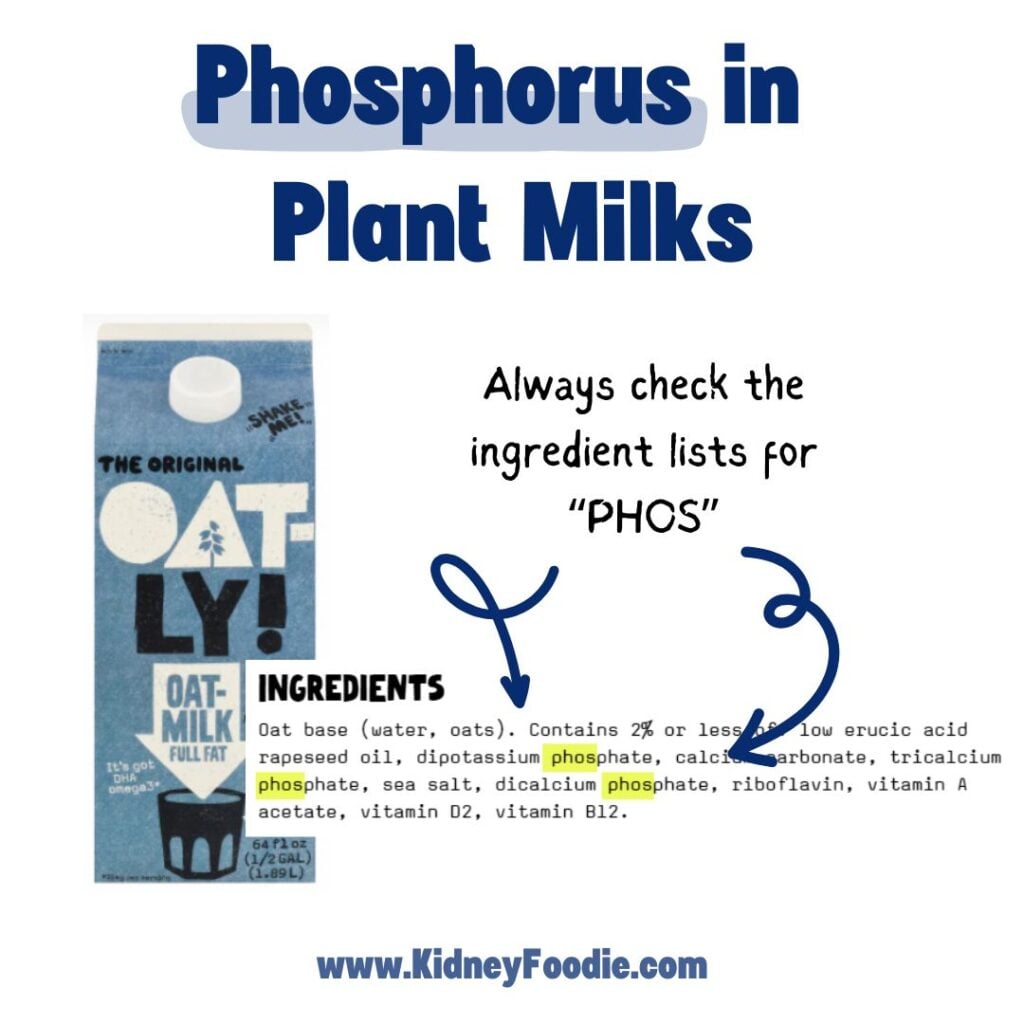
Why does phosphorus matter in CKD? Too much phosphorus in the blood can pull calcium out of your bones, weaken them, and lead to dangerous calcium-phosphate buildup in blood vessels and soft tissues. Your blood levels of phosphorus will not always be a good indicator of whether you are getting too much phosphorus in the diet. To be safe, choose almond milk without added phosphates.
Almond Milk Is Low in Protein—Is That Good or Bad?
One cup of almond milk typically contains only 1 gram of protein—far less than the 8 grams in cow’s milk.
Why does protein matter in CKD? When you eat protein, your body creates waste products like urea and creatinine that the kidneys must filter out. For people with CKD who are not on dialysis, limiting protein—especially animal protein—to the right amount can help preserve kidney function. Plant-based milks like almond milk can help reduce protein load while still offering a versatile milk alternative.
What About Calcium in Almond Milk?
When most people think of milk, they think of calcium—and with good reason. Calcium is important for bone health and plays a key role in muscle contractions, nerve function, and maintaining a steady heartbeat.
Like most nutrients in CKD, calcium needs to be kept in balance. Too little calcium can weaken bones, but too much—especially in the form of supplements or additives—can contribute to calcium buildup in blood vessels and soft tissues.
The KDOQI guidelines recommend that people with chronic kidney disease aim for 800–1,000 mg of calcium per day, including what you get from food, supplements, and medications.
Most almond milks are fortified with calcium to provide a similar amount to cow’s milk—often around 300–450 mg per cup. This can be helpful if you’re not getting much calcium elsewhere in your diet. But if you take calcium-based phosphate binders or have elevated calcium levels, you may want to avoid high-calcium beverages and opt for one that is unfortified or contains less calcium.
There has been a case of a person with CKD developing severe hypercalcemia from almond milk, however this man was drinking a GALLON of If you’re unsure whether you need a high- or low-calcium milk, talk with your healthcare provider or dietitian.
What About Sodium in Almond Milk?
Most plant milks have more sodium than calories, so we would technically consider them higher sodium foods. However, the overall amount of excess sodium is usually small, and easily offset by making lower sodium choices elsewhere in the day.
For many people, the benefit of having a lower phosphorus, lower potassium milk source outweighs the excess sodium.
This post may contain affiliate links through which we may earn a small commission to help keep this website free.
Almond Milk vs Cow’s Milk: Nutrient Comparison
| Nutrient | Unsweetened Almond Milk | Cow’s Milk (2%) | Why It Matters for CKD |
| Potassium | ~60 mg | ~350 mg | Too much potassium can cause dangerous heart symptoms |
| Phosphorus | ~20–30 mg (without additives) | ~230 mg | Additives can raise phosphorus absorption dramatically |
| Protein | ~1 g | ~8 g | Lower protein can reduce kidney workload |
| Sodium | ~140 mg | ~100 mg | Sodium raises blood pressure and fluid retention |
| Calcium | ~440mg | ~290mg | Important for bone health |
Always check the label—nutrition varies by brand and flavor.
Who Should Be Cautious with Almond Milk?
Almond milk isn’t ideal for everyone. You may want to choose a different plant milk if:
- You’re on dialysis and need more protein and calories
- You have a nut allergy
- You’re prone to calcium oxalate kidney stones
Almonds are naturally high in oxalates, and although almond milk typically has lower levels than whole almonds, it can still contribute to oxalate intake. Certain individuals who need to carefully follow a low oxalate diet may need to choose an alternate milk. Talk to your dietitian to confirm.
So, Is Almond Milk Good for Kidney Disease?
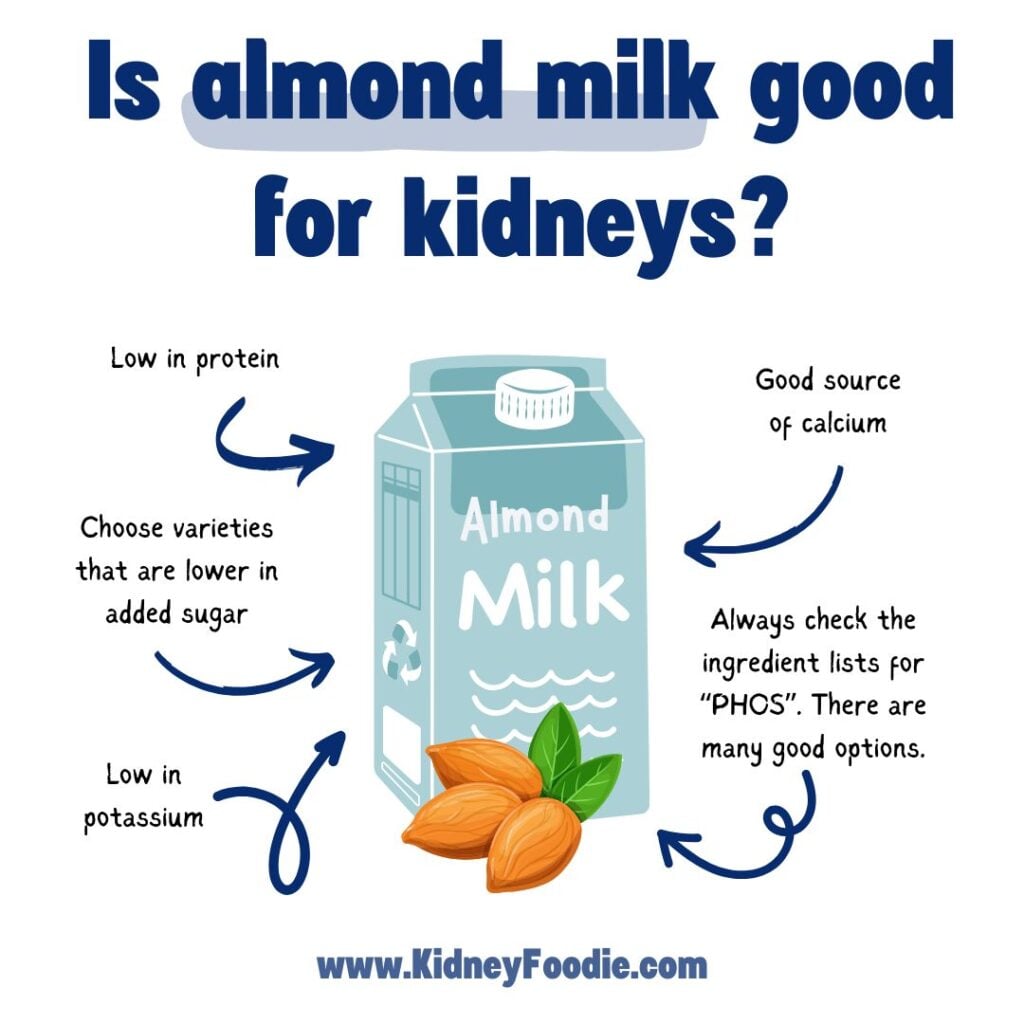
Yes—unsweetened almond milk without phosphate additives is a great kidney-friendly milk alternative for most people with CKD. It’s low in potassium, low in phosphorus, and low in protein, making it a gentle choice on your kidneys. Just make sure you’re reading the label and choosing a variety that fits your specific needs.
To make sure your almond milk is truly kidney-friendly, read the ingredient list carefully. Look for no phosphate additives (like tricalcium phosphate), unsweetened varieties (added sugars aren’t kidney-friendly either), and low sodium (under 150 mg per cup is a good target).
Kidney Friendly Almond Milk You Can Buy
Califia Farms Extra Creamy Almond Milk
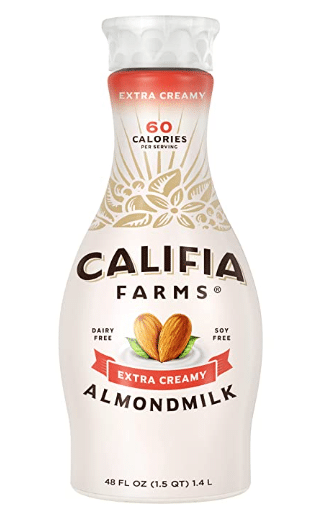
- Calories: 60
- Protein: 1g
- Carbohydrate: 6g
- Fat: 3.5g
- Sodium: 140mg
- Phosphorus
Additives: None - Potassium: 70mg
- Calcium: 440mg
- Fiber: 1g
- Sugar: 5g
Check Prices

Califia Farms Unsweetened Almondmilk

- Calories: 35
- Protein: 1g
- Carbohydrate: 1g
- Fat: 3g
- Sodium: 140mg
- Phosphorus
Additives: None - Potassium: 60mg
- Calcium: 440mg
- Fiber: 1g
- Sugar: 0g
Check Prices
Blue Diamond Almond Milk
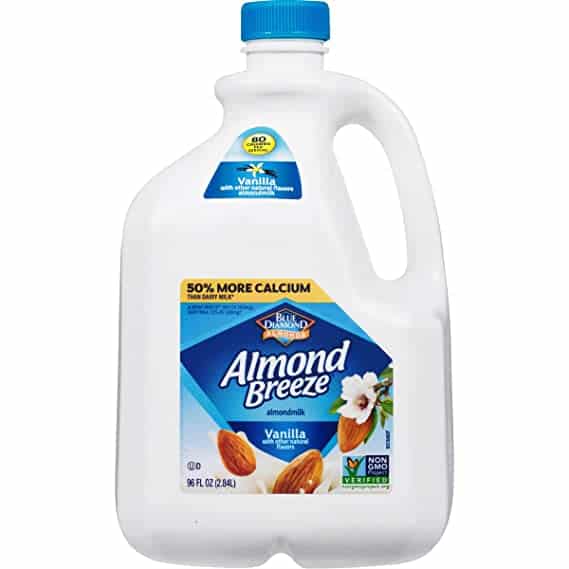
- Calories: 80
- Protein: 1g
- Carbohydrate: 14g
- Fat: 2.5g
- Sodium: 150mg
- Phosphorus
Additives: None - Potassium: 170mg
- Calcium: 450mg
- Fiber: 1g
- Sugar: 12g
Check Prices
Almond Breeze Unsweetened Almond Milk
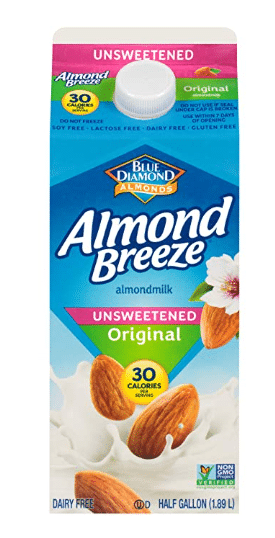
- Calories: 30
- Protein: 1g
- Carbohydrate: 1g
- Fat: 2.5g
- Sodium: 170mg
- Phosphorus
Additives: None - Potassium: 160mg
- Calcium: 450mg
- Fiber: 1g
- Sugar: 0g
Check Prices
Silk Almondmilk
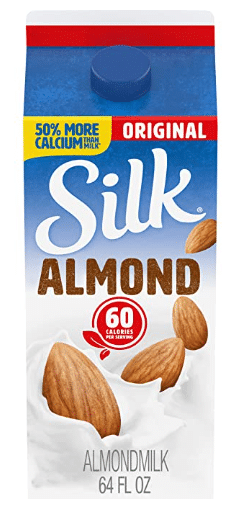
- Calories: 60
- Protein: 1g
- Carbohydrate: 8g
- Fat: 2.5g
- Sodium: 150mg
- Phosphorus
Additives: None - Potassium: 170mg
- Calcium: 450mg
- Fiber: 0g
- Sugar: 7g
Check Prices
Califia Farms Coconut and Almond Milk Blend

- Calories: 45
- Protein: 0g
- Carbohydrate: 1g
- Fat: 4g
- Sodium: 140mg
- Phosphorus
Additives: None - Potassium: 90mg
- Calcium: 460mg
- Fiber: 0g
- Sugar: 1g
Check Prices
Kirkland Unsweetened Almond Milk

- Calories: 30
- Protein: 1g
- Carbohydrate: 1g
- Fat: 2.5g
- Sodium: 110mg
- Phosphorus
Additives: None - Potassium: 35mg
- Calcium: 600mg
- Fiber: 1g
- Sugar: 0g
Almond Malk
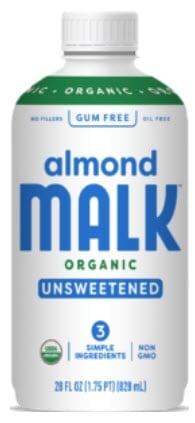
- Calories: 70
- Protein: 2g
- Carbohydrate: 3g
- Fat: 6g
- Sodium: 140mg
- Phosphorus
Additives: None - Potassium: 80mg
- Calcium: 40mg
- Fiber: 3g
- Sugar: 0g
Check Prices
Moolala Almond Milk
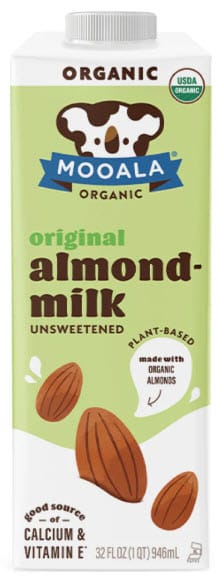
- Calories: 40
- Protein: 2g
- Carbohydrate: 2g
- Fat: 3.5g
- Sodium: 120mg
- Phosphorus
Additives: None - Potassium: 50mg
- Calcium: 150mg
- Fiber: 1g
- Sugar: 0g
Check Prices