
If you’ve ever wandered down the snack aisle searching for something quick, tasty, and kidney-friendly, you’ve probably noticed how tricky it can be to find the right granola bar. Many popular brands are packed with sodium, phosphorus additives, or more protein than you might need. The good news? With a little know-how, it’s possible to find kidney friendly granola bars that fit your nutrition goals. In this article, we’ll walk through what to look for and highlight the better store-bought options to make your shopping easier.
Table of contents
This post may contain affiliate links through which we may earn a small commission to help keep this website free.
How to Choose a Kidney Friendly Granola Bar
Lower in Protein
One of the biggest problems with many bar options on the market these days is that they are simply too high in protein.
Protein is an important nutrient for everyone, including people with kidney disease. Your body needs protein each day to maintain muscle, support your immune system, and help repair tissues. But when your kidneys aren’t working at full strength, too much protein can put strain on the kidneys and create more waste products than the kidney can reasonably get rid of. This increased stress on the kidneys may speed up the decline in kidney function over time.
If you have chronic kidney disease and are NOT on dialysis, then you need to be searching for a snack bar that is lower in protein. My general rule of thumb is to aim for a bar with 5g of protein or less. Of course, the exact amount that’s right for you will depend on your overall diet, your stage of kidney disease, your weight, and your activity level. This is why it’s always best to look at your whole day’s eating pattern, not just one snack in isolation.
The bottom line is that while protein is still essential, “more” isn’t always better if you have kidney disease. Choosing lower-protein, kidney friendly granola bars can help you enjoy a convenient snack without tipping your protein intake over what your kidneys need to handle.
Are protein bars bad for your kidneys?
Protein bars are usually not a good choice for people with kidney disease who are not on dialysis, since they tend to be very high in protein, often contain phosphorus additives, and are frequently loaded with sugar and sodium. For people on dialysis, who have higher protein needs, a protein bar can sometimes fit into the eating plan—as long as it’s free of phosphorus additives and not too high in sodium.
For someone with decreased kidney function who is not on dialysis, though, that extra protein may put more strain on the kidneys. If you truly weren’t getting enough protein from the rest of your diet, a protein bar might help, but in practice most people can meet their needs without protein-fortified foods. That’s why, for most people with CKD, it’s better to reach for snacks that offer fiber, healthy fats, and whole grains without the kidney stressors.
Avoid Phosphorus Additives
A lot of snack bars and granola bars contain phosphorus additives, which are bad for people with kidney disease. Too much phosphorus can damage your cardiovascular system and increase your risk of developing certain CKD-related bone disorders. For that reason, it’s best to avoid phosphorus additives whenever possible. If a bar does not contain any additives, it can be considered a low phosphorus snack bar.
Some bars even list phosphorus content on the nutrition label. For example, one Luna Bar label reported 8% of the Daily Value, which equals about 100 mg of phosphorus.
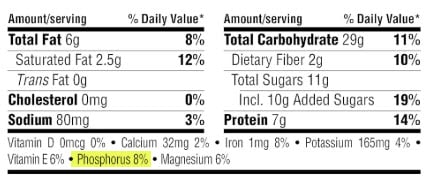
That may sound like a huge amount, but the problem is that nutrition labels don’t tell you how much of that phosphorus your body will actually absorb. Phosphorus from additives is absorbed almost completely, while phosphorus that naturally occurs in plant foods (like oats or nuts) is much less available to the body. In the Luna Bar’s case, the phosphorus appeared to come from plant sources—making it less concerning than it first looked on paper.
Because absorption varies so much depending on the source, I usually tell my clients not to stress over the phosphorus number on the label. Instead, the most important thing to check is the ingredient list. As long as the bar is free from phosphorus additives, it can be considered a kidney friendly, low phosphorus choice. Natural phosphorus from whole foods is only partly absorbed, so the source matters more than the total listed amount.
Low Sodium Granola Bars
For people with kidney disease—at every stage—the daily sodium goal is 2300mg or less. Eating too much sodium can raise blood pressure, cause fluid retention, put extra strain on your heart, and even increase the risk for bone loss over time. Unfortunately, many packaged snack and granola bars are surprisingly high in sodium, especially ones that are marketed as “savory” or “high-protein.”
A simple rule of thumb when reading labels is to choose a bar with fewer milligrams of sodium than calories. For example, if a bar has 200 calories, it should ideally have less than 200 mg of sodium. This one strategy makes it much easier to stay under your daily limit without having to track every single milligram. If you apply this rule across your meals and snacks, you’ll naturally keep sodium in a kidney-friendly range.
Low Potassium Snack Bar?
Whether or not you need to worry about potassium really depends on your individual situation. Many people with kidney disease who are not on dialysis don’t actually need to limit potassium in their diet. Unless your healthcare provider has specifically told you to restrict potassium, there’s no reason to cut back on potassium-rich foods.
It’s also important to remember that potassium levels can be influenced by many factors besides food—such as medications, acid-base balance, or how well your kidneys are working that day. That’s why it’s best not to self-restrict. If you’re unsure whether you should be limiting potassium, it’s a good idea to check in with your care team (or request an appointment to talk it through).
If you’d like to learn practical strategies for keeping your potassium in range—without avoiding healthy fruits and vegetables—you can sign up for our free 5-Day email course below. These strategies focus on the whole picture of potassium management, not just food lists.
That said, if you do need to watch your potassium, one simple rule of thumb is to check the label: look for bars where the potassium (in milligrams) is less than the calories. If that’s the case, you can generally consider it a low potassium choice.
Kidney Friendly Granola Bars and Snack Bars you Can Buy
Truth Bar – Dark Chocolate Raspberry Coconut

- Calories: 180
- Protein: 1g
- Carbohydrate: 27g
- Fat: 12g
- Sodium: 85mg
- Phosphorus
Additives: None - Potassium: 121mg
- Calcium: 5mg
- Fiber: 8g
- Sugar: 5g
Check Prices

Kind Maple Glazed Pecan and Sea Salt

- Calories: 200
- Protein: 5g
- Carbohydrate: 14g
- Fat: 17g
- Sodium: 140mg
- Phosphorus
Additives: None - Potassium: 188mg
- Calcium: 50mg
- Fiber: 5g
- Sugar: 5g
Check Prices
Target Fruit and Nut Bar
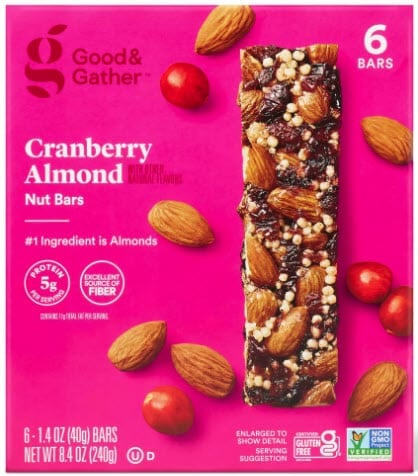
- Calories: 180
- Protein: 5g
- Carbohydrate: 21g
- Fat: 11g
- Sodium: 15mg
- Phosphorus
Additives: None - Potassium: 160mg
- Calcium: 60mg
- Fiber: 9g
- Sugar: 8g
Check Prices

Cascadian Farm Organic Chocolate Chip Bars

- Calories: 140
- Protein: 2g
- Carbohydrate: 26g
- Fat: 3.5g
- Sodium: 90mg
- Phosphorus
Additives: None - Potassium: 0mg
- Calcium: 0mg
- Fiber: 2g
- Sugar: 8g
Check Prices
Annie’s Organic Chewy Granola Bars

- Calories: 100
- Protein: 2g
- Carbohydrate: 17g
- Fat: 3g
- Sodium: 75mg
- Phosphorus
Additives: None - Potassium: 0mg
- Calcium: 0mg
- Fiber: 0g
- Sugar: 7g
Check Prices
Blue Dinosaur Cinnamon Scroll Bar

- Calories: 220
- Protein: 4g
- Carbohydrate: 21g
- Fat: 14g
- Sodium: 5mg
- Phosphorus
Additives: None - Potassium: 270mg
- Calcium: 60mg
- Fiber: 3g
- Sugar: 15g
Check Prices
All In Peruvian Dark Chocolate + Peanut Butter

- Calories: 180
- Protein: 5g
- Carbohydrate: 21g
- Fat: 11g
- Sodium: 150mg
- Phosphorus
Additives: None - Potassium: 151mg
- Calcium: 21mg
- Fiber: 6g
- Sugar: 9g
Larabar Cashew Cookie Bar

- Calories: 220
- Protein: 5g
- Carbohydrate: 25g
- Fat: 12g
- Sodium: 5mg
- Phosphorus
Additives: None - Potassium: 300mg
- Calcium: 0mg
- Fiber: 2g
- Sugar: 15g
Check Prices
Munk Pack Keto – Coconut Almond Dark Chocolate

- Calories: 140
- Protein: 3g
- Carbohydrate: 17g
- Fat: 12g
- Sodium: 60mg
- Phosphorus
Additives: None - Potassium: 130mg
- Calcium: 30mg
- Fiber: 5g
- Sugar: 1g
Check Prices
Nick’s Swedish Style Snack Bar
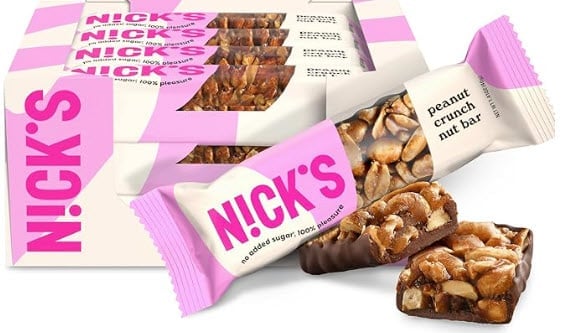
- Calories: 180
- Protein: 7g
- Carbohydrate: 17g
- Fat: 13g
- Sodium: 135mg
- Phosphorus
Additives: None - Potassium: 150mg
- Calcium: 20mg
- Fiber: 9g
- Sugar: 0g
Check Prices
Atkins Endulge Bars

- Calories: 130
- Protein: 5g
- Carbohydrate: 16g
- Fat: 8g
- Sodium: 50mg
- Phosphorus
Additives: None - Potassium: 80mg
- Calcium: 20mg
- Fiber: 5g
- Sugar: 1g
Check Prices
Blake’s Seed-Based Chewy Granola Bars

- Calories: 120
- Protein: 2g
- Carbohydrate: 17g
- Fat: 5g
- Sodium: 40mg
- Phosphorus
Additives: None - Potassium: 20mg
- Calcium: 0mg
- Fiber: 1g
- Sugar: 6g
Check Prices
Quaker Chewy Lower Sugar Granola Bars

- Calories: 100
- Protein: 1g
- Carbohydrate: 17g
- Fat: 4g
- Sodium: 75mg
- Phosphorus
Additives: None - Potassium: 50mg
- Calcium: 110mg
- Fiber: 3g
- Sugar: 5g
Check Prices
Clif Kids Zbar

- Calories: 140
- Protein: 2g
- Carbohydrate: 24g
- Fat: 5g
- Sodium: 105mg
- Phosphorus
Additives: None - Potassium: 92mg
- Calcium: 15mg
- Fiber: 2g
- Sugar: 10g
Check Prices